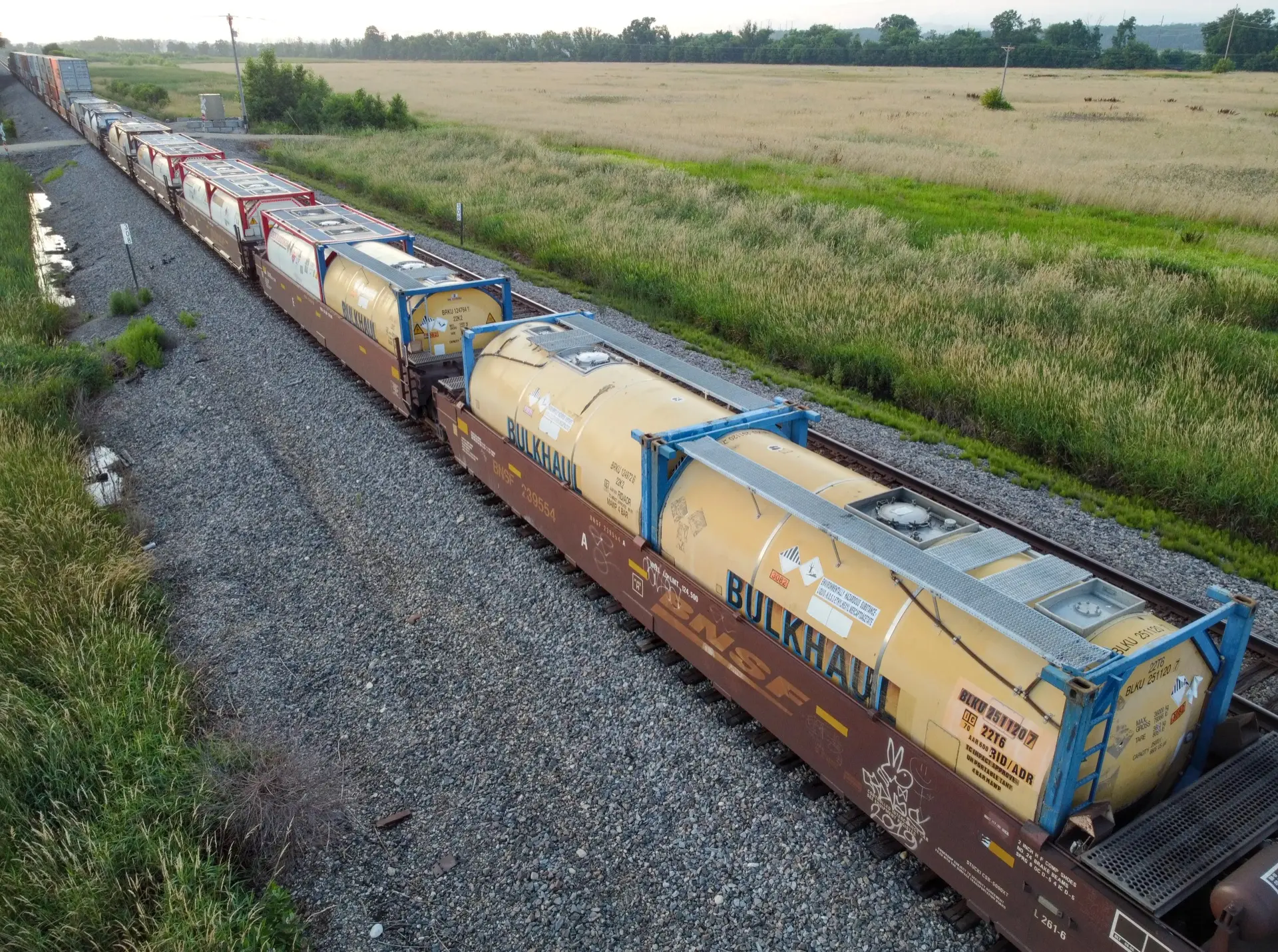
ISO tank containers are reusable stainless steel pressure vessels of roughly 21,000 to 26,000 litres built into a 20-foot frame, while flexitanks are single-use polymer bladders of 16,000 to 24,000 litres fitted inside a standard dry container. ISO tanks handle hazardous and temperature-controlled cargo and win on repeat lanes; flexitanks are cheaper per shipment for non-hazardous liquids on one-way routes with no return leg.
The choice between an ISO tank and a flexitank is usually presented as a cost comparison. It is not. It is a decision about cargo classification, cleaning liability, temperature control, and whether the lane has a viable return leg. Buyers who reduce it to price per litre routinely discover the missing variables at the terminal gate.
For edible oil importers, chemical buyers, base oil distributors, and food ingredient processors, getting this decision right removes an entire category of avoidable loss — contamination claims, rejected containers, and demurrage while a substitute is arranged.
What Is an ISO Tank Container?
An ISO tank container is a cylindrical pressure vessel, normally stainless steel, mounted within a standardised 20-foot frame so it can move interchangeably by ship, rail, and road under the same handling equipment as a dry container.
The type codes matter commercially because they define what the tank may legally carry:
- T11: The general-purpose type for non-hazardous and lower-hazard liquids, with a minimum test pressure of 4 bar — the workhorse for edible oils, base oils, and many chemicals
- T14: Higher-specification tanks for more aggressive or higher-hazard cargoes, with heavier construction and stricter fittings
- Food-grade certified: Tanks with documented cleaning history and materials suitable for foodstuffs, supported by a cleaning certificate for each movement
- Heated and insulated: Steam coils or electric heating for cargoes that solidify or thicken, such as palm oil, tallow, and certain waxes
What Is a Flexitank?
A flexitank is a single-use multi-layer polyethylene bladder installed inside a standard 20-foot dry container, converting general-purpose container capacity into bulk liquid capacity for one journey.
- Non-hazardous cargo only: Flexitanks are not approved for dangerous goods, which removes a large part of the chemical trade from consideration
- Single use: The bladder is discarded after discharge, eliminating cleaning liability but creating a disposal obligation at destination
- No return leg: The container reverts to dry use, which is precisely why flexitanks suit imbalanced trade lanes
- Limited temperature control: Heating options exist but are constrained compared with a jacketed ISO tank
Flexitank failures, when they occur, tend to be catastrophic rather than marginal — a bladder rupture loses the full parcel and contaminates the container. Quality of the flexitank supplier and correct installation therefore carry disproportionate weight.
Cleaning, Contamination, and the Previous-Cargo Question
With ISO tanks, the governing risk is the previous cargo and the adequacy of the cleaning between loads, evidenced by a cleaning certificate that names the prior product and the cleaning procedure applied.
- Cleaning certificate: Should state the previous cargo, the wash procedure, the detergents used, and the inspecting party — a certificate that omits the previous cargo is not a certificate
- Previous-cargo restrictions: Food-grade movements commonly require the prior one to three cargoes to be from an approved list, a requirement that must be written into the transport contract
- Seal integrity: Numbered seals recorded at loading and verified at discharge, with any discrepancy raised before opening
- Pre-load inspection: Independent surveyor confirmation that the tank is dry, odour-free, and fit for the nominated cargo
Our guide to verifying inspection reports applies directly to tank cleanliness surveys, which follow the same authentication logic as cargo quality certificates.
When Each Option Wins
ISO tanks win on hazardous cargo, temperature-controlled cargo, high-value cargo, and balanced lanes with a return leg; flexitanks win on non-hazardous liquids moving one way on imbalanced lanes where equipment repositioning would otherwise dominate cost.
- Choose an ISO tank when: the cargo is classified dangerous goods, requires heating or temperature maintenance, is high value per litre, or moves on a route with reliable return cargo
- Choose a flexitank when: the cargo is non-hazardous, ambient-stable, moving one way into a market with no backhaul, and the receiving site can handle bladder disposal
- Consider parcel tankers instead when: volume exceeds roughly 500 MT on a single lane, at which point neither container option is the efficient answer
For volumes above container scale, our wholesale edible oils page covers bulk parcel supply.
Selection Comparison
| Factor | ISO Tank Container | Flexitank |
|---|---|---|
| Typical capacity | 21,000 to 26,000 litres | 16,000 to 24,000 litres |
| Hazardous goods | Yes, subject to type code | No |
| Reusable | Yes, many cycles | No, single use |
| Heating | Steam or electric, jacketed | Limited |
| Cleaning liability | Buyer or operator, certificate required | None, bladder discarded |
| Return leg | Required, affects cost | Not required |
| Best lane type | Balanced, repeat volume | Imbalanced, one way |
Frequently Asked Questions
What is the capacity of an ISO tank container?
Most 20-foot ISO tanks hold between 21,000 and 26,000 litres, with 24,000 litres common for general-purpose T11 units. Usable capacity is constrained by cargo density and by fill-level rules, since tanks generally must be loaded either above 80 percent or below 20 percent to control liquid surge.
Can flexitanks carry hazardous chemicals?
No. Flexitanks are approved only for non-hazardous liquids. Any cargo classified as dangerous goods under the IMDG Code requires an appropriately certified ISO tank of the correct type code.
Are flexitanks safe for edible oils?
Yes, food-grade flexitanks are widely used for edible oils on one-way lanes, provided the bladder is food-contact certified, correctly installed, and the container is inspected as clean and dry before fitting. The main risks are installation quality and bladder integrity rather than the concept itself.
Who is responsible for tank cleaning between cargoes?
Responsibility follows the contract, but the practical requirement is the same in all cases: a cleaning certificate naming the previous cargo and the procedure applied, issued before loading. Movements under food-grade or previous-cargo restrictions require that list to be verified in advance.
What volume justifies moving from containers to a parcel tanker?
As a general guide, sustained volumes above roughly 500 MT on a single lane begin to favour parcel tanker or coaster stowage over container equipment. The crossover depends on port infrastructure, shore tank availability, and how evenly the volume is spread across the year.
Ready to discuss how your edible oil should ship? Contact XRT's edible oils desk at oils [at] xrtgroup.com or submit a requirement through our procurement portal.