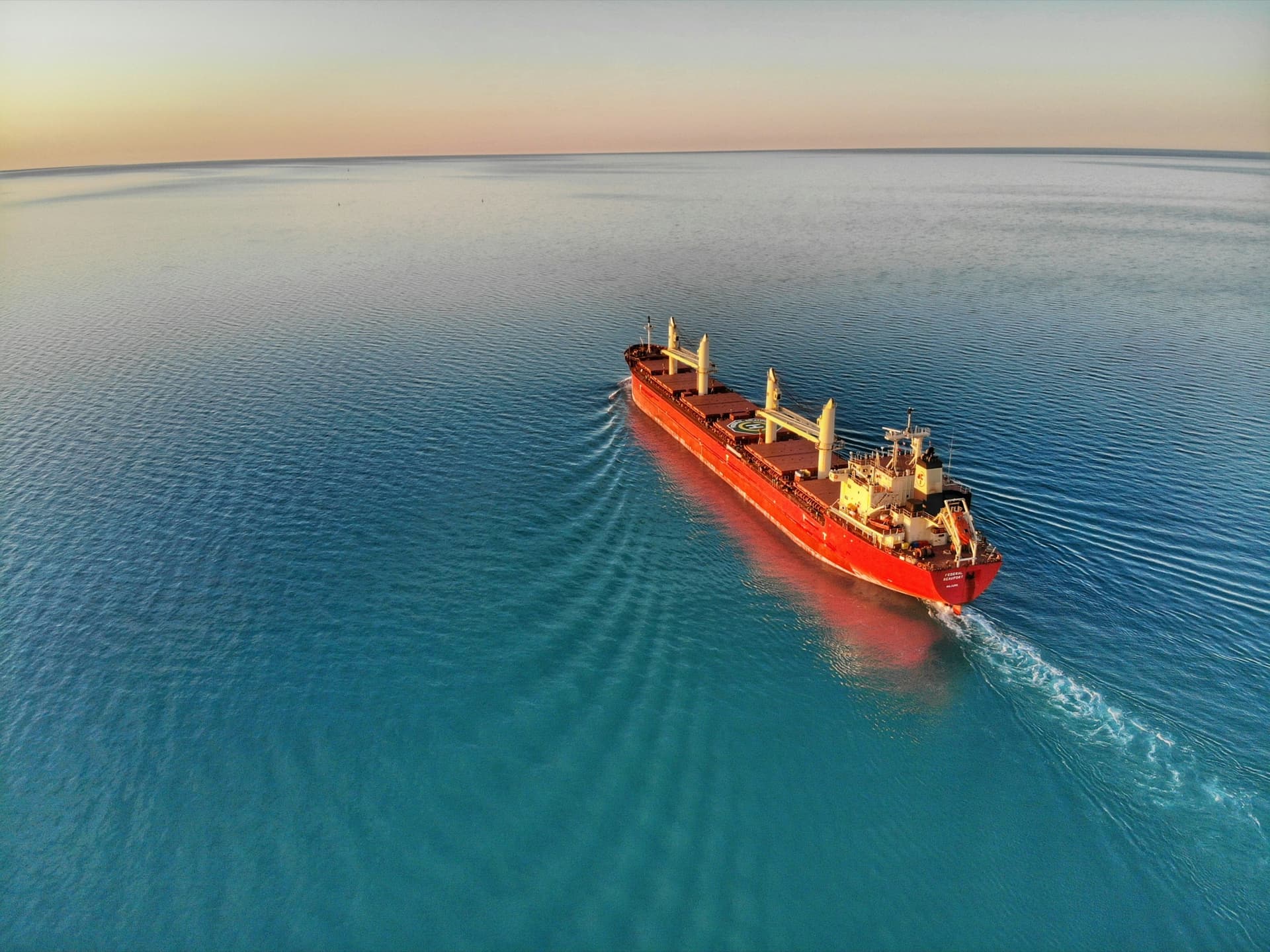
VLSFO is very low sulphur fuel oil with maximum 0.50 percent mass sulphur, the residual marine fuel grade created by the IMO 2020 global sulphur cap and specified under ISO 8217. The dominant commercial risks are not price but stability, compatibility between bunkerings, and cat fines — which is why the MARPOL retained sample and the bunker delivery note govern every quality claim.
Before 2020, residual marine fuel was a relatively uniform product. High sulphur fuel oil at 3.5 percent was blended from a narrow set of refinery streams and behaved predictably. The global sulphur cap replaced that with a fragmented market of blended VLSFO grades whose components vary by refinery, by port, and sometimes by delivery.
For shipowners, charterers, and commercial fuel distributors, this changed the nature of bunker procurement. The question is no longer only what the fuel costs. It is whether this delivery will remain stable in the tank, whether it will mix safely with what is already on board, and whether the paperwork will survive a claim.
What Is VLSFO?
VLSFO is a residual marine fuel blended to meet a maximum sulphur content of 0.50 percent mass by mass, introduced to comply with MARPOL Annex VI regulation 14 as amended by the IMO 2020 global sulphur cap.
The category sits between two neighbours that are frequently confused with it:
- HSFO: High sulphur fuel oil above 0.50 percent, lawful only for vessels fitted with an approved exhaust gas cleaning system
- VLSFO: Maximum 0.50 percent sulphur, the default compliant residual grade for most of the world fleet
- ULSFO: Maximum 0.10 percent sulphur, required inside sulphur Emission Control Areas, including the Baltic Sea, North Sea, North American, US Caribbean and (since 1 May 2025) Mediterranean Sea ECAs
ISO 8217 supplies the framework specification. The 2024 edition introduced clearer treatment of blend components and bio-blended residual grades, but the standard remains a framework: it does not guarantee that two compliant VLSFO deliveries will be compatible with each other.
The Three Quality Risks That Actually Cause Losses
Commercial losses on VLSFO arise mostly from stability, compatibility, and catalytic fines rather than from sulphur non-compliance, because sulphur is easy to test and off-spec sulphur deliveries are comparatively uncommon.
- Stability: The asphaltenic fraction can drop out of solution during storage or heating, forming sludge that blocks purifiers and filters. Total sediment potential is the governing parameter, limited to 0.10 percent mass
- Compatibility: Two individually stable fuels can be mutually incompatible. Commingling in a tank precipitates sludge that neither fuel would form alone — the reason segregated bunkering and spot compatibility testing exist
- Catalytic fines: Aluminium plus silicon particles carried over from refinery catalytic cracking, limited to 60 mg/kg in the delivered fuel. Abrasive damage to liners, rings, and fuel pumps is cumulative and expensive
Prudent operating practice keeps aluminium plus silicon well below the ISO limit at the engine inlet, which places the burden on purifier performance as much as on the purchase specification.
Documentation: The BDN and the MARPOL Sample
A bunker quality claim is won or lost on the bunker delivery note and the MARPOL retained sample, not on the vessel's own analysis, because only the retained sample carries agreed evidential standing.
The evidence chain has strict requirements:
- Bunker delivery note: Must state the sulphur content, the supplier, the product grade, and quantity, and must be retained on board for three years under MARPOL Annex VI
- MARPOL sample: Drawn at the receiving vessel's manifold throughout the delivery, sealed, and retained for twelve months — this is the sample a flag state or port state will test
- Commercial samples: Additional sealed sets for the owner, charterer, and supplier, drawn at the same point and time
- Notice of protest: Issued promptly where sampling procedure, quantity measurement, or documentation departs from the contract
Sampling location matters more than most buyers expect. A sample drawn at the barge manifold rather than the vessel manifold does not represent what the vessel received, and a claim built on it is materially weaker.
Hub Pricing and Supply Reliability
Bunker pricing differs by hub not only on the underlying product cost but on the depth of the local supply pool, barge availability, and the credit terms customary in that port.
- Singapore: The world's largest bunkering port by volume, the reference point for Asian pricing, with mandatory mass flow metering
- Rotterdam and the ARA range: The European benchmark hub, with wide blend-component availability and ECA proximity driving ULSFO demand
- Fujairah: The Middle East gateway serving Hormuz and Indian Ocean routings
- US Gulf Coast: Refinery-adjacent supply with pricing tied closely to domestic residual balances
Our guide to energy supply security sets out the diversification logic behind multi-hub bunkering.
Marine Fuel Grade Comparison
| Grade | Max Sulphur | Typical Use | Primary Risk |
|---|---|---|---|
| HSFO (RMG 380) | 3.50% m/m | Scrubber-fitted vessels | Scrubber availability and washwater rules |
| VLSFO | 0.50% m/m | Global compliant default | Stability and compatibility on blending |
| ULSFO | 0.10% m/m | Emission Control Areas | Cost premium and cold-flow behaviour |
| MGO (DMA) | 0.10% m/m for ECA use (ISO 8217 DMA allows up to 1.00%) | ECA, auxiliary, port stay | Viscosity limits and pump lubricity |
Frequently Asked Questions
What does VLSFO stand for?
VLSFO stands for very low sulphur fuel oil. It is a residual marine fuel blended to a maximum sulphur content of 0.50 percent mass by mass, the compliant grade under the IMO 2020 global sulphur cap for vessels without exhaust gas cleaning systems.
Is VLSFO the same as ISO 8217 RMG 380?
No. RMG 380 describes a viscosity grade of up to 380 centistokes at 50 degrees Celsius. VLSFO describes a sulphur limit. A fuel can be both, but the two terms are not interchangeable — a contract should state the viscosity grade and the sulphur limit separately.
Why do VLSFO compatibility problems happen?
VLSFO is a blend, and blend components vary by refinery and port. Two individually stable fuels with different asphaltene and aromatic balances can precipitate sludge when mixed. The mitigation is tank segregation, spot compatibility testing before commingling, and avoiding routine mixing of deliveries from different sources.
How long must a MARPOL bunker sample be retained?
The MARPOL Annex VI retained sample must be kept on board for twelve months from the date of delivery, or until the fuel is substantially consumed if that is later. The bunker delivery note itself must be retained for three years.
Can XRT supply VLSFO outside the main bunker hubs?
Possibly. Supply in secondary ports depends on local terminal and barge availability, and independent sampling and inspection can be appointed on the buyer's behalf. Availability and lead time vary by port and are confirmed before the fixture.
Ready to secure compliant bunker supply with verified quality? Contact XRT's energy desk at energy [at] xrtgroup.com or submit a requirement through our procurement portal.