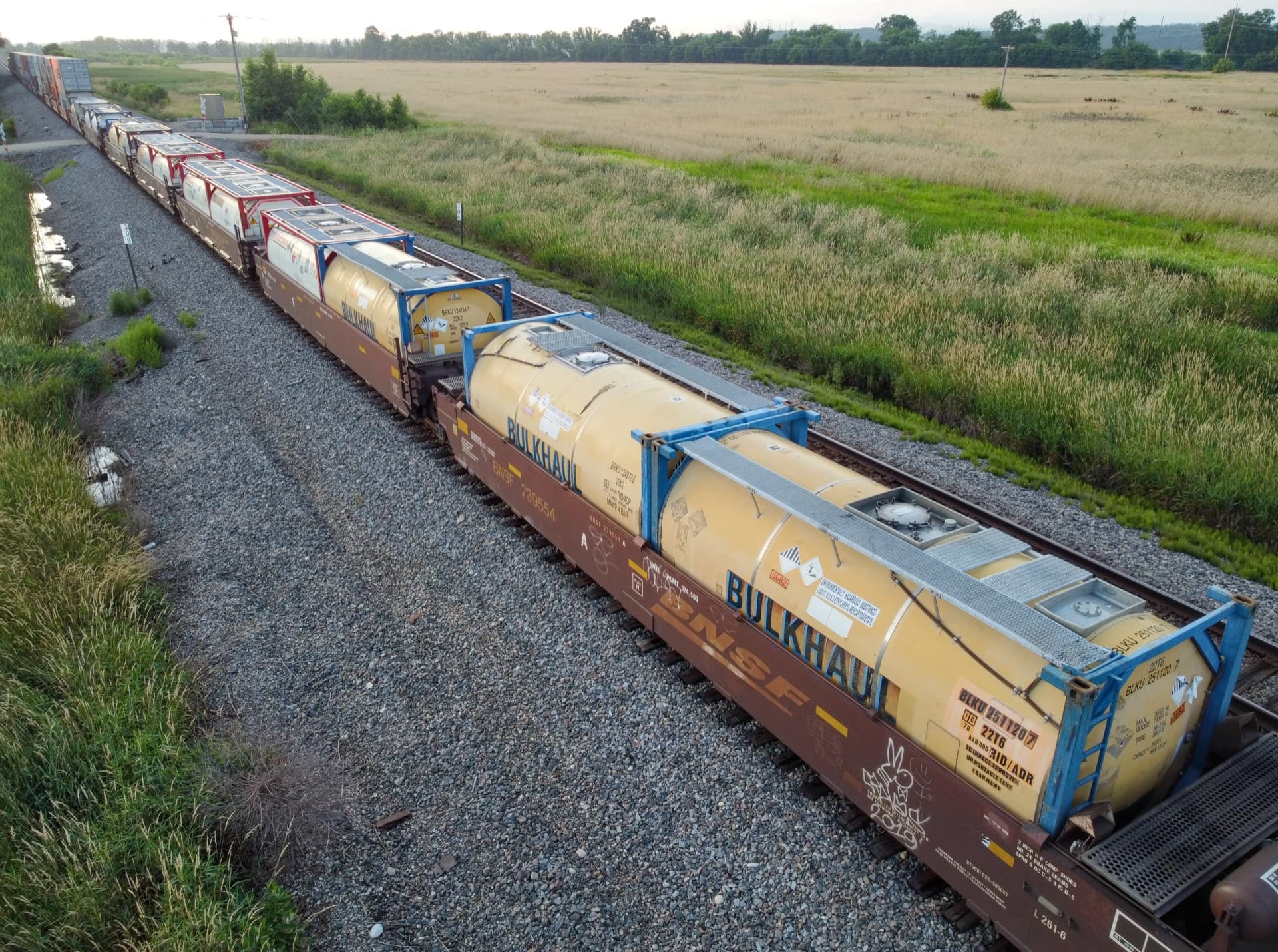
For edible oil cargoes, the flexitank-wins-when the economics of a one-way booking beat the capital cost of a dedicated tank — and the ISO tank wins whenever precise temperature control, full hazardous goods compliance, or ironclad previous-cargo control matter more than the per-container price. The decision is a cost-per-ton problem solved with cargo value, lane direction, and contamination tolerance.
Every edible oil logistics manager has looked at a 22-ton flexitank booking next to a tank container quote and made a spreadsheet decision. The math is rarely wrong on the line item; it is wrong on everything the spreadsheet leaves out — heating capability, cleaning liability, leak risk, and what happens when the liner leaks into the container.
This guide compares flexitanks and ISO tank containers specifically for food-grade edible oil: capacity, heating, cleaning, hazardous goods, contamination risk, cost per ton, and the contract terms that allocate the risk between shipper, carrier, and buyer.
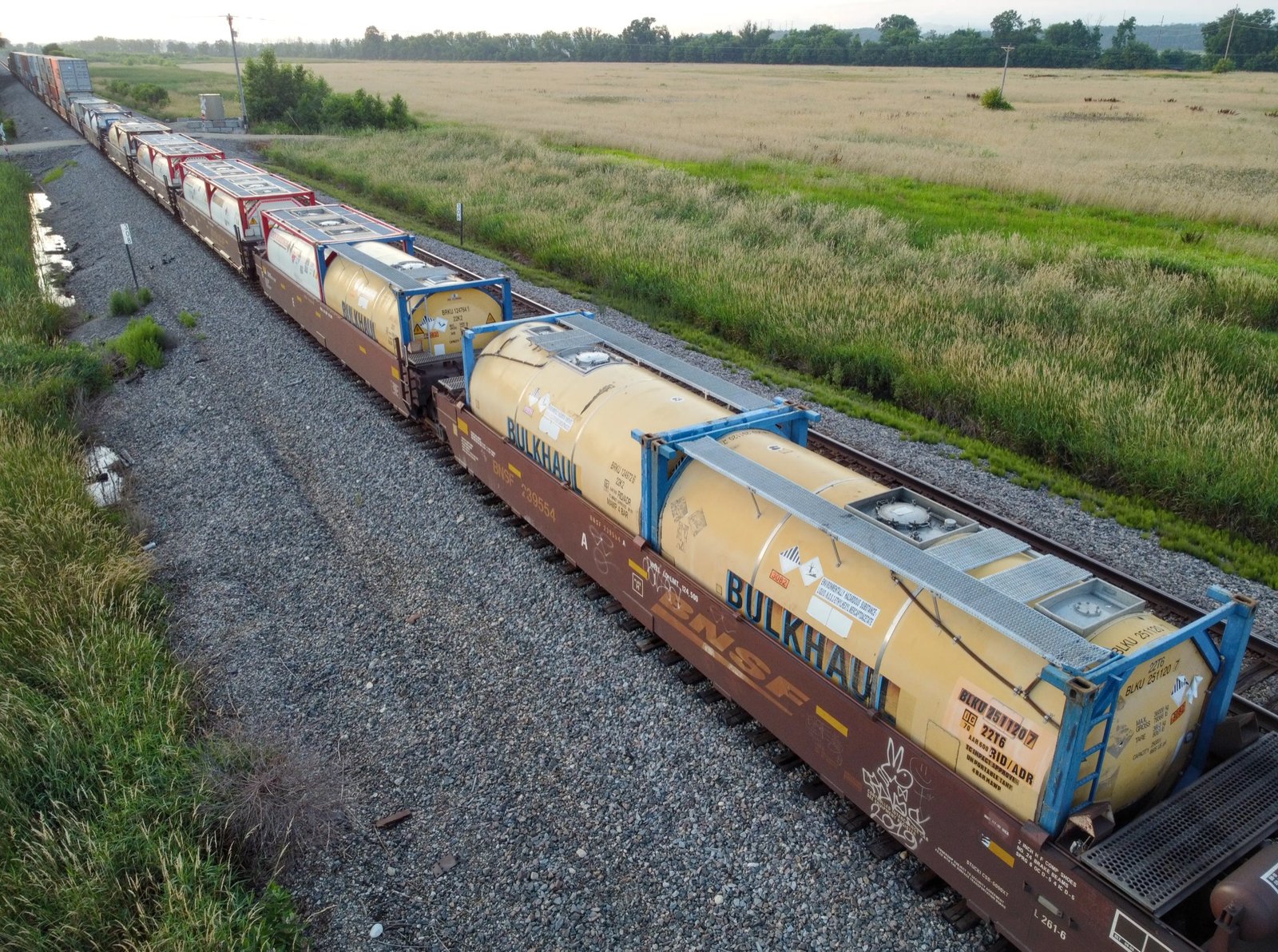
Table of Contents
Flexitank vs ISO tank: the core trade-offs
The choice between a flexitank in a standard 20 ft container and an ISO tank container (typically the T11, 24,000–26,000 liter frame) comes down to five variables when carrying edible oil:
- Capital structure — the flexitank is a single-use liner inside a regular container; the ISO tank is a reusable asset that must earn back its value across voyages or sit in the owner's fleet.
- Heating capability — ISO tanks come with integral steam coils (or electric heating) that give close temperature control for high-melt oils like palm oil and coconut oil; a flexitank can carry the same oils using a heater pad placed under the bag and connected to steam or hot water at discharge, but with less precise control in transit.
- Cleaning and previous cargo — the flexitank is new and clean by definition; the ISO tank is only as clean as the last washout and its cleaning certificate.
- Hazardous goods — regulated products may require the tank container standard (IMDG, T-code approvals); food-grade oils usually do not.
- Reverse logistics — a flexitank frees the container for a return load; an ISO tank must be repositioned empty or loaded, which is a cost either way.
None of these variables is absolute. They become decisive only against the specific lane, oil type, and cargo value.
When a flexitank is the right choice for edible oils
Flexitanks are the default for food-grade oils that are liquid at ambient temperature: RBD palm olein, sunflower, soybean, rapeseed, and most blended cooking oils. They win when:
- The lane is one-directional — backhaul cargo exists for standard containers, so a liner voyage costs the container slot and nothing else.
- Bulk volume is a partial container — standard flexitanks run from about 16,000 to 24,000 liters, letting a buyer size the load to the order rather than to a full ISO tank.
- Cleaning risk must be eliminated — a new food-grade liner removes the previous-cargo question entirely, which matters for pharmaceutical-grade and food-contact cargoes.
- You want door-to-door simplicity — the liner arrives with the container and is emptied with standard equipment at destination.
The constraints are real: heating only through an under-bag heater pad (less precise than an ISO tank's integral coils), capacity capped at about 24,000 liters (roughly 22 metric tons of edible oil at a density of about 0.91 kg/L), and leakage risk if the liner is punctured in transit.
When an ISO tank container is the right choice
ISO tanks take over when the cargo or the lane outgrows a flexitank:
- Palm oil, coconut oil, and other high-melt fats — these pour only above their melting point; flexitanks with heater pads can move them, but an ISO tank's integral steam coils give tighter temperature control and more even heating at discharge, which matters for sensitive grades and long voyages.
- Large, repeating volumes — an import program running hundreds of tons per month amortizes tank capital quickly and earns better freight rates on returnable equipment.
- Products needing segregated assets — if the same tank can be dedicated to your oil grade and never touch incompatible cargo, washout costs drop and certification history builds.
- Regulated or approved-cargo contexts — where shippers and receivers require tank container standards (ISO 1496-3, IMDG approvals), only a certified tank qualifies.
The premium is per-shipment: tank rental, washout between voyages, repositioning, and the freight premium some carriers apply to tank equipment. Volume and cargo characteristics are what justify it.
Real cost comparison per metric ton
On a single container, the flexitank typically wins on line-item cost; on a monthly program, the ISO tank economics start to close the gap — and heating, washout, and repositioning terms decide which the spreadsheet misses.
Build the comparison per metric ton, not per container, and include every leg:
- The liner vs the tank — a food-grade flexitank liner plus installation is a modest per-voyage cost inside the container freight; an ISO tank adds a rental element per day plus the carrier's tank-slot premium.
- The return leg — the flexitank container can be released for a return cargo by the receiver; the ISO tank must be repositioned, washed, or stored, and the cost lands either on your freight or the tank lessor's tariff.
- Destination handling — flexitank discharge uses the container's own equipment; tank discharge at a heated terminal may carry heating and pumping service charges.
- Heating energy — palm oil and coconut oil must be heated to pumping temperature in either mode, through the tank's steam coils or through a flexitank heater pad fed with steam or hot water; price the pad, the destination heating supply, and the longer discharge time into the flexitank case.
Run the model both ways at program volume. The breakeven usually sits in the range of a few containers per month per lane — below it, flexitank; above it, the tank fleet starts paying for itself.
Cleaning, contamination, and previous-cargo risk
Previous cargo is the contamination question that neither mode escapes: the flexitank answers it with a new liner, and the ISO tank answers it with a washout certificate — and only one of those answers is a physical guarantee.
For a food-grade oil, the risks to manage are:
- Flexitank: the liner is virgin material and the risk is mechanical — an empty-container mishandling, a temperature extreme, or a puncture. The cargo rides in what is effectively a clean single-use vessel.
- ISO tank: the risk is the residue of the previous cargo and the quality of the washout. A tank that carried a chemical or a non-food-grade product must be washed to the standard the oil contract demands, and the washout certificate must state the actual cleaning performed, not a generic "cleaned."
- Odor and taint: edible oil picks up odor from residual cargo and liner materials; contracts for food-grade oils should rule out certain previous cargo categories outright and require tank for food-grade use only language.
The buyer's protection is the same in both modes: a paper trail that is specific. "Food-grade liner, new" for flexitanks; "tank dedicated food-grade, washout certificate attached, cleaned per COA standard" for ISO tanks.
How to contract the logistics for either mode
The mode chooses the terms: a flexitank contract lives inside the container freight quote, while an ISO tank contract lives in the tank rental and washout schedule — write both fully or the gaps become claims.
- For flexitanks: contract the liner grade and capacity, the heater pad and discharge heating where the oil needs it, the installation point, maximum load and density limits, the discharge method, and the contamination liability — including what happens if the liner bursts in transit or the cargo is contaminated at load.
- For ISO tanks: contract the tank standard (ISO 1496-3, T-code where relevant), previous-cargo history, washout and cleaning certificate terms, heating obligations (target temperature at discharge), and repositioning responsibility.
- For both: specify the COA and sampling at load and discharge, demurrage ownership, and the surveyor who verifies quantity and condition at each end — the same terms that protect an edible oil cargo whether it moves in a liner or a tank.
When freight is quoted, ask for the mode-specific extras in writing: heating, washout, repositioning, and equipment condition. Every unwritten extra is a priced claim later.
Frequently Asked Questions
Is a flexitank cheaper than an ISO tank?
On a single container, usually yes — the liner is a small add-on to an ordinary container quote, while an ISO tank carries rental, washout, and repositioning costs. At program volume with heating or segregation needs, the ISO tank economics often win.
Can flexitanks carry food-grade edible oil?
Yes. Flexitanks are the default mode for food-grade oils that are liquid at ambient temperature, using a new food-grade single-use liner in each container, and high-melt oils such as palm oil can also ship in flexitanks fitted with heater pads. The protection comes from the liner being new and virgin-grade, not from the container.
What is the maximum load for a flexitank?
Standard 20 ft flexitanks range from about 16,000 to 24,000 liters. At an edible oil density of roughly 0.91 kg/L, a full 24,000-liter flexitank holds about 21.8 metric tons, so the practical maximum payload is about 22 tons, within the container's payload limit and with a safety margin for the voyage.
What previous cargo settles liability on an ISO tank?
The washout and cleaning certificate. Contracts should state the previous-cargo standards acceptable for food-grade oils and require the terminal's cleaning documentation — that certificate is what transfers liability from the tank owner to the shipper's risk.
Who is liable if a flexitank bursts in transit?
It depends on the contract: liner defects and loading damage normally sit with the shipper or liner supplier, while transit mishandling sits with the carrier. The remedy is the same in both modes — a specific contract and a joint survey at the event.
Summary
Three takeaways for edible oil shipping mode selection:
- Flexitanks win on one-directional lanes, partial volumes, ambient-temperature oils, and cleaning certainty; ISO tanks win on precise temperature control, program volume, and segregation.
- Model the cost per ton including heating, washout, and repositioning — the breakeven sits at a few containers per month per lane.
- Contract mode-specific terms explicitly: liner grade, heater pads, and burst liability for flexitanks; tank standard, washout certificates, and heating for ISO tanks.
Pair the mode decision with destination quality protection — see how FFA, peroxide, and COA verification work at port or submit an edible oils RFQ.
References
- Container Owners Association — Flexitanks technical resource: the industry reference for flexitank construction, safe loading, and operating parameters, including the typical 24,000-liter capacity and 24,000 kg maximum weight cited above.
- Fluid Flexitanks — Heater pads for palm oil transportation: how heater pads placed under the flexitank keep palm oil and similar high-melt cargoes pumpable.
- Techno Group — Heat pads for flexitanks: heater pads connected to steam or hot water at the discharge point to re-melt solidified cargo.
- ISO 1496-3 — Tank containers for liquids: the standard covering the T11 tank container frame, fittings, and service conditions referenced for ISO tank operations.