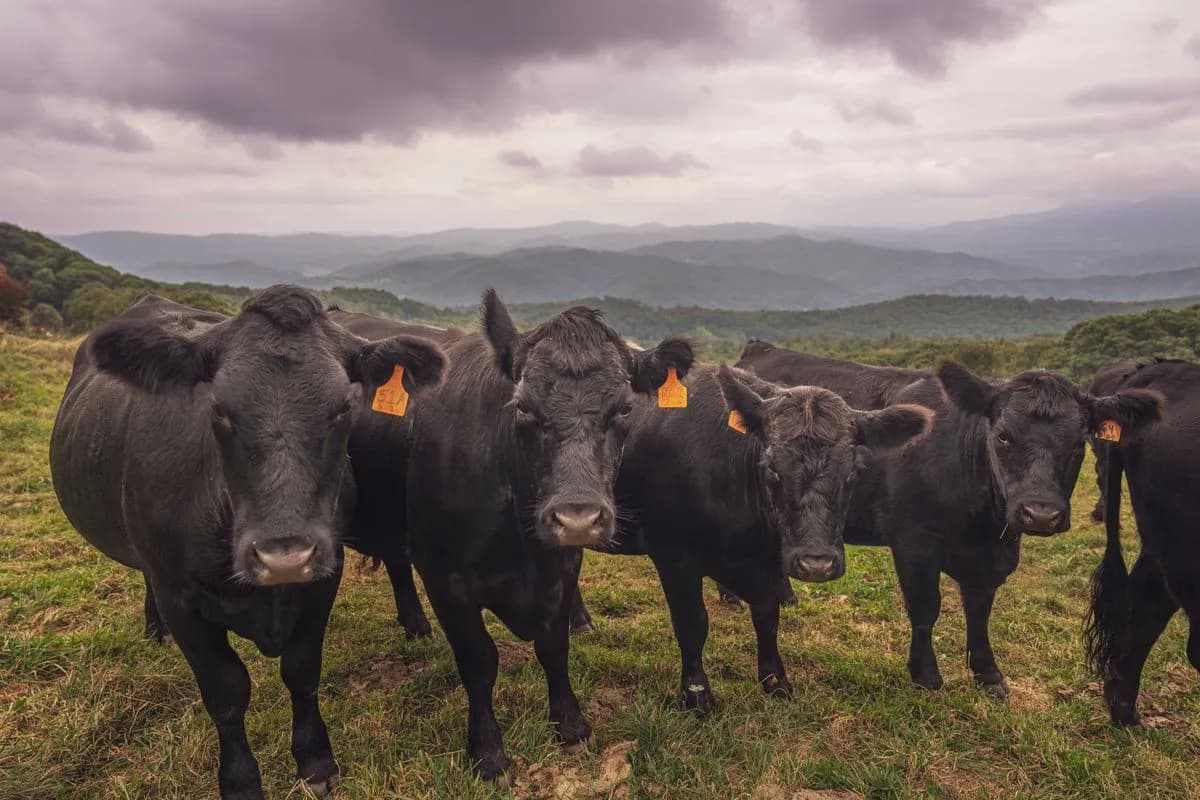
The EU Deforestation Regulation (EUDR) is not yet applying to beef: after the amendment made by Regulation (EU) 2025/2650, it applies from 30 December 2026 for large and medium operators and from 30 June 2027 for micro and small operators. From those dates, beef placed on the EU market must come from cattle kept on land that was not deforested after 31 December 2020, backed by geolocation of every establishment where the cattle were kept and a due diligence statement filed by the operator that first places the product on the EU market.
EUDR is not a packaging label rule and it is not a livestock welfare rule. It is a supply-chain geography rule: the EU operator must be able to show, with coordinates and documentation, that the cattle behind a consignment were kept on land that was not deforested after the 31 December 2020 cutoff. Everything else — the cuts, the grade, the certificates — is secondary to that one question.
The deadline has already moved twice, but the requirement has not gone away. For US beef exporters, the practical effect is that EU-bound programs are being renegotiated now, ahead of 30 December 2026, around geolocation data, due diligence files, and contract clauses that allocate documentation obligations between feedlots, packers, exporters, and EU importers.
Table of Contents
- What is the EUDR and why does it apply to beef?
- What are the EUDR deadlines for beef?
- What due diligence documents does EUDR require for beef?
- What does land-parcel geolocation mean for cattle?
- How do EU buyer requirements flow back to exporters?
- What should beef exporters prepare before 30 December 2026?
What is the EUDR and why does it apply to beef?
The EU Deforestation Regulation (Regulation (EU) 2023/1115) will prohibit placing products on the EU market — or exporting them from the EU — unless they are deforestation-free, legally produced, and covered by a due diligence statement. Cattle and beef are in the regulation's scope because cattle production is among the leading drivers of deforestation globally: animals graze on land converted from forest, and that conversion is precisely what the 31 December 2020 cutoff is designed to stop.
Beef buyers should read EUDR as a materials rule, not a farm rule. The commodity in scope is cattle, and the obligation attaches to the product — the operator that first places beef on the EU market must exercise due diligence and file a statement for it. That obligation cascades backward through the supply chain in the form of contract clauses, geolocation data requests, and certificate language.
What are the EUDR deadlines for beef?
Regulation (EU) 2025/2650, adopted on 19 December 2025, postponed the EUDR for a second time and changed who has to file what. Two dates now set the planning calendar:
- 30 December 2026 — the regulation starts applying to large and medium operators and traders. For an EU importer of that size, every beef consignment placed on the market from this date needs a complete due diligence file and statement.
- 30 June 2027 — the later application date for micro and small operators, giving smaller importers an extra six months to build their systems.
The amendment also lightened the load further down the chain. Downstream operators and traders no longer file their own due diligence statements; they keep the reference number of the statement made by the operator that first placed the product on the market and retain supplier and customer records. Micro and small primary operators in countries classed as low risk can submit a single, one-off simplified declaration instead of repeated statements.
For beef exporters, the practical reading is unchanged in substance: the first fully documented EU shipments will move from late December 2026, and EU buyers will ask for traceability evidence months before that date so their due diligence files are ready when the rules bite.
What due diligence documents does EUDR require for beef?
The EUDR due diligence file for beef rests on four pillars:
- Geolocation data — latitude and longitude coordinates of all the establishments where the cattle were kept. For cattle, the regulation ties geolocation to every establishment in the animal's life, not only the last one.
- Date or time range — the period during which the cattle were kept at each establishment, together with evidence that the land was not deforested after 31 December 2020, typically via satellite imagery, cadastral records, or farm-level documentation.
- Due diligence statement — a statement filed in the EU Information System by the operator that first places the beef on the EU market, confirming the risk assessment performed and that the risk is negligible.
- Evidence of legality — documentation showing production complied with the relevant laws of the country of production, including land use rights, environmental rules, and labor law.
Because the exporter sits upstream of the EU importer, most of this evidence will have to travel with the shipment: establishment coordinates, feedlot records, transfer documents, and the certificates that let the importer reconstruct the chain without calling every farm.
What does land-parcel geolocation mean for cattle?
Cattle are the hard case in EUDR geolocation because a single animal's history spans multiple locations: birth farm, grazing pasture, backgrounding ranch, and feedlot. The regulation requires geolocation of all the establishments where the cattle were kept — not just the last location, but the whole production chain.
- Establishment coordinates: each establishment where the animals grazed or were housed must be captured with latitude and longitude coordinates, together with the dates the animals were there.
- Cutoff evidence: the test is that the land was not deforested after 31 December 2020. Land that was already pasture on that date passes; land cleared of forest after that date does not, no matter how long ago the animals left it.
- Chain reconstruction: feedlot-to-packer transfer records and animal identification data (such as US official ear tags) are the audit trail operators will use to reconstruct the chain when an EU buyer asks.
The operational consequence for exporters: coordinates must be collected at the source, not reconstructed after the sale. Exporters should start asking feedlots and ranches for establishment data now, because the data does not exist until someone collects it.
How do EU buyer requirements flow back to exporters?
EU importers will not invent tracing systems to help exporters; they will write the requirement into the contract and allocate the burden of evidence to whoever is best placed to produce it. Expect EU beef purchase contracts to carry dedicated due diligence clauses ahead of the December 2026 deadline, with four practical effects:
- Data riders: clauses requiring geolocation files, establishment registers, and production-chain chronology to be delivered with the export documents.
- Certificate alignment: the health certificate and export documentation will need to reconcile with the due diligence file, so the two document trails must be drafted together rather than separately.
- Price and inspection terms: buyers will price the cost of compliance into the contract — exporters with systems in place will capture the margin, exporters without them will carry it as discount or exclusion.
- Liability allocation: indemnity and force majeure language will start to reflect which party's system failure caused a compliance gap, which changes how rejection risk is priced.
Exporters who read these clauses as boilerplate will learn otherwise at the first EU compliance check or the first rejected consignment.
What should beef exporters prepare before 30 December 2026?
The preparation window is the months before the deadline: whatever systems a beef program needs for EUDR evidence — establishment data collection, chronology records, document alignment — take a full season to build and validate, not a week. The practical checklist:
- Map the cattle chain. Identify every farm, ranch, and feedlot behind each product line and confirm who holds location and animal identification data.
- Build the evidence template. Agree a standard geolocation and chronology format that packers, feedlots, and ranchers can fill without legal help.
- Align documents. Draft the EU certificate set and the due diligence evidence as one package, so the two trails reference each other cleanly.
- Test the file. Run a pilot consignment through the full evidence chain and an internal review against the Commission's guidance before 30 December 2026 forces it.
- Price it. Add the compliance cost to the offer explicitly — buyers will pay for documents they can actually use.
EUDR compliance for beef is a paperwork program, not a farm program. The programs that treat it like engineering will be the ones clearing customs while competitors sit in holds.
Frequently Asked Questions
When does EUDR apply to beef?
Following Regulation (EU) 2025/2650, the EUDR applies from 30 December 2026 for large and medium operators and traders, and from 30 June 2027 for micro and small operators. Beef placed on the EU market from those dates needs a complete due diligence file.
What EUDR documents does an exporter need to provide?
The exporter supplies the evidence; the EU operator files the statement. The operator's due diligence file rests on geolocation coordinates for all establishments where the cattle were kept, the dates they were kept there, evidence that the land was not deforested after 31 December 2020, and evidence that the beef was legally produced.
Does grass-fed vs grain-fed change EUDR compliance?
No. EUDR is a geography rule, not a production-system rule. Both grass-fed and grain-fed beef must show that the land where the cattle grazed or were housed meets the deforestation-free test; the production system only changes which establishments need documenting.
Does EUDR apply to all beef cuts and processed beef products?
The scope covers the cattle products listed in Annex I of the regulation, which is defined by customs code. The Commission's May 2026 simplification review also proposed product-scope adjustments through a draft delegated act, so export programs should verify each SKU against the current annex and guidance.
What happens if an exporter cannot provide geolocation data?
Then the EU operator cannot lodge a defensible due diligence statement, and from the application date the beef cannot lawfully be placed on the EU market. In practice that means the contract is contested or the cargo is diverted — at the exporter's cost under most shipping terms.
Summary
Three takeaways for beef export planning under the EUDR:
- The deadlines are now 30 December 2026 (large and medium operators) and 30 June 2027 (micro and small), set by Regulation (EU) 2025/2650 — and evidence collection has to start a full season earlier.
- Geolocation of every establishment where the cattle were kept, plus proof the land was not deforested after 31 December 2020, is the core burden, and it must be collected at the source, not reconstructed at the sale.
- Buyers will encode due diligence requirements into contracts, so certificate and due diligence files must be built as one aligned package.
Building an EU-compliant beef export program? See how beef export documentation works in practice or submit a proteins RFQ.
References
- EUR-Lex — Regulation (EU) 2023/1115 on deforestation-free products: the legal text, including the deforestation-free definition, the 31 December 2020 cutoff, and the geolocation rules for cattle.
- EUR-Lex — Regulation (EU) 2025/2650 amending Regulation (EU) 2023/1115: the amendment that postponed application to 30 December 2026 and 30 June 2027 and changed downstream obligations.
- European Commission, Access2Markets — Delay until December 2026 and other developments in the implementation of the EUDR: summary of the new dates, the downstream operator changes, and the simplified declaration.
- European Commission — EUDR FAQs and guidance: the operational answers on livestock geolocation and due diligence filing referenced above.