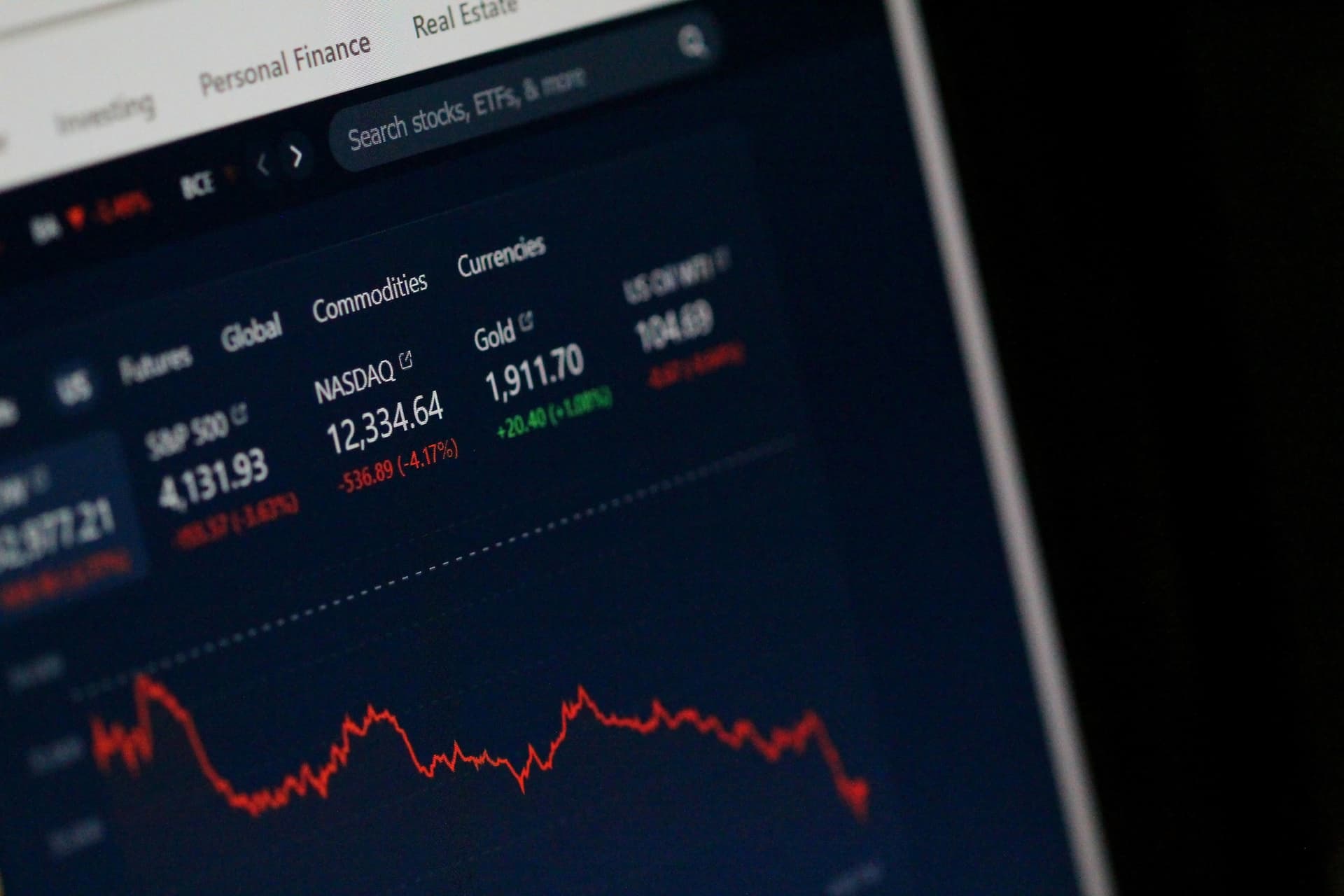
When a seller quotes a commodity price, the number on the page is not arbitrary. It is derived from a benchmark — a reference price that reflects actual market transactions, assessed by an independent pricing agency, updated continuously, and published to the market.
Procurement directors who understand how commodity benchmarks work have a structural advantage over those who treat commodity prices as opaque external variables. They negotiate better contract terms, build more accurate budgets, make smarter decisions about when to fix versus float pricing, and identify when a supplier's quoted premium is out of line with market.
This guide explains the benchmark architecture behind energy, agricultural, edible oil, and freight markets — the reference prices that shape what XRT Group's buyers pay.
Why Benchmarks Exist
Direct negotiation of commodity prices between buyers and sellers every day would be commercially unworkable. Benchmarks solve this by creating a shared, publicly available reference price that reflects the market's collective assessment of fair value for a standardized commodity at a given location and time. Transactions are priced as: [benchmark] +/- [premium/discount] reflecting the specific grade, location, and logistics circumstances.
Energy Commodity Benchmarks
Crude Oil: Brent and WTI
Brent Crude (ICE) is the most widely used international crude benchmark and the reference for a large share of internationally traded crude. The underlying physical basket is North Sea crude — Brent, Forties, Oseberg, Ekofisk and Troll ("BFOET") — with WTI Midland added to the Dated Brent basket from June 2023. Primary benchmark for Atlantic basin and European crude flows. Quoted in USD/barrel.
WTI (NYMEX) is the primary benchmark for US domestic crude pricing. Physical delivery at Cushing, Oklahoma. The Brent-WTI spread is a closely watched indicator: when Brent trades significantly above WTI, it signals favorable conditions for US crude exports.
How crude oil contract pricing works in practice: A supply agreement might specify: "Price equal to Platts Dated Brent assessment minus $2.75/BBL, with price fixing date on Bill of Lading date." Neither party knows the absolute dollar price until the BL date — but both know the pricing mechanism.
Platts Price Assessments: The Market's Source of Record
Platts, part of S&P Global Commodity Insights, is one of the main price reporting agencies for petroleum products, alongside Argus. Their assessments include Platts Dated Brent, Platts Gasoil/Diesel (for EN590), Platts Jet/Kerosene, and Platts Bunker assessments.
CIF NWE (Cost, Insurance, Freight, North West Europe) is the most common Platts assessment for diesel EN590 pricing in European trade. ULSD NYMEX is the US futures reference for ultra-low sulfur diesel.
Refined Product Pricing: Crack Spreads and Refinery Economics
The crack spread is the difference between the price of a refined product and the crude oil from which it was produced. Understanding crack spread dynamics helps buyers time contract fixing decisions more intelligently than simply watching crude oil prices alone.
Agricultural Commodity Benchmarks
CBOT: The Chicago Board of Trade Futures Complex
| Commodity | Contract | Symbol | Unit |
|---|---|---|---|
| Corn | CBOT Corn | ZC | cents/bushel |
| Wheat | CBOT Wheat (SRW) | ZW | cents/bushel |
| Soybeans | CBOT Soybeans | ZS | cents/bushel |
| Soybean Meal | CBOT Soybean Meal | ZM | $/short ton |
| Soybean Oil | CBOT Soybean Oil | ZL | cents/lb |
The Basis Explained
If CBOT December Corn is trading at 425 cents/bushel and the price for US Gulf corn FOB New Orleans is 430 cents, the Gulf basis is +5 cents. The basis reflects transportation cost, handling margins, local supply-demand conditions, and quality premiums. Procurement directors must track both CBOT and the physical basis — a decline in CBOT may be fully offset by widening basis.
Edible Oil Benchmarks
BMD (Bursa Malaysia Derivatives): The Palm Oil Reference
The Bursa Malaysia Derivatives exchange is the primary price discovery venue for global palm oil. Key contracts: Crude Palm Oil (CPO) Futures and RBD Palm Olein Futures. BMD CPO prices are quoted in Malaysian Ringgit (MYR) per metric ton.
Physical RBD palm oil trade is typically priced as: "CPO +/- [processing spread] +/- [quality/origin premium]"
CBOT Soybean Oil (ZL)
The benchmark for soybean oil, quoted in cents per pound. Convert to $/MT by dividing by 0.04536. Brazilian soybean oil exports are priced at a Paranaguá FOB premium over CBOT.
Platts Edible Oil Assessments
S&P Global Commodity Insights publishes daily assessments for FOB Rotterdam soybean oil, FOB Rotterdam sunflower oil, FOB Malaysia palm olein, FOB Malaysia RBD palm oil, and FOB Argentina soybean oil.
Logistics Benchmarks: Baltic Exchange
Baltic Dry Index (BDI): Composite index of dry bulk vessel charter rates. Rising BDI signals tightening bulk vessel availability.
Baltic Clean Tanker Index (BCTI): Composite rate index for clean petroleum product tankers. Rising BCTI increases CIF landed cost.
Baltic Dirty Tanker Index (BDTI): Composite index for crude oil tankers.
How to Use Benchmarks in Contract Negotiation
Choosing Fixed vs. Floating Pricing
| Pricing Mechanism | Best When | Risk |
|---|---|---|
| Fixed price | Benchmarks are low; need budget certainty | Miss downside if markets fall further |
| Floating (indexed) | Markets are elevated; expecting decline | Full price exposure if markets rise |
| Collar (floor + ceiling) | High uncertainty; need managed range | Premium cost; limits upside capture |
| Average price (AATP) | Avoid timing risk; consistent cost | Can miss strategic lows |
Specifying the Pricing Mechanism in Contracts
Every commodity supply agreement must specify the benchmark, the differential, the fixing date, the assessment time, the pricing currency, and force majeure on pricing. Ambiguity in any of these parameters creates disputes at settlement.
Budget Forecasting Using Benchmarks
Forward curves — the market's implied future prices visible in NYMEX, ICE, CBOT, and BMD futures — allow procurement teams to build commodity cost budgets with explicit assumptions rather than point estimates. A range-based approach to commodity budgeting is more defensible to finance leadership than a single-point estimate.
Common Pricing Mistakes Industrial Buyers Make
- Confusing the futures price with the physical price. Your supply agreement is probably for a different grade at a different location.
- Accepting vague pricing language. "Market price" in a supply contract is not a pricing mechanism — it is the absence of one.
- Ignoring currency exposure. Benchmarks denominated in USD create currency risk for buyers whose functional currency is something else.
- Timing large purchases based on price direction opinions. Systematic purchasing programs reduce the risk of committing large volumes at a bad moment.
- Not tracking the basis. The basis can move significantly and independently of the futures benchmark.
How XRT Group Uses Market Intelligence in Procurement Execution
XRT Group's procurement team follows benchmark prices, forward curves, freight indices, and physical basis markets for the commodity categories we quote. This market intelligence informs contract structure recommendations, origin selection, timing guidance, and budget support for finance teams.
Frequently Asked Questions
What is Platts and how is it different from an exchange?
Platts (part of S&P Global Commodity Insights) is a price assessment agency — it assesses and publishes benchmark prices based on market intelligence, but does not operate a trading exchange. CME Group (NYMEX, CBOT), ICE, and Bursa Malaysia are exchanges where futures contracts are traded.
Why does the diesel price at the pump not directly match crude oil price movements?
Retail diesel prices include refinery margin (crack spread), distribution costs, taxes, and retail margin — none of which track crude oil directly. Industrial bulk diesel procurement is much more directly linked to crude benchmarks.
What does "backwardation" mean in commodity markets?
Backwardation means the spot price is higher than forward prices — the market expects prices to fall. For buyers, backwardation suggests that buying spot and not fixing forward contracts can be economically rational. Contango suggests the opposite.
How often do commodity benchmarks change?
Most commodity benchmarks are assessed and published daily on trading days. Futures prices update in real time during exchange trading hours. For physical commodity procurement, the relevant price is typically the assessment published on a specified date in the contract.
Ready to build smarter commodity contracts with appropriate pricing mechanisms? Contact our procurement desk at procurement [at] xrtgroup.com or submit an inquiry through our contact portal.